Sometimes the most important breakthrough isn’t finding another diagnosis—it’s asking a better question. Discover the story that reshaped Dr. Brett Earl’s understanding of medicine and became the foundation of everything Denali stands for today.
For sixteen years, Dr. Brett Earl practiced emergency medicine.
Board-certified. Trained in environments where hesitation costs lives. He had seen virtually everything the human body can experience — from fractures to full cardiac arrests, from common illness to catastrophic neurological events. The emergency department is medicine without a safety net. You assess, you decide, you act.
He was good at it. He was proud of it.
And then his own body began to fail.
It didn’t happen all at once. It crept in the way serious illness often does — disguised as fatigue, as stress, as the reasonable wear of a demanding career. He told himself what most of us tell ourselves:
“I just need more rest. It will pass.”
It didn’t pass.
What followed was a deterioration that touched nearly every system in his body. His energy disappeared. His thinking blurred. His heart, his lungs, his joints, his gut — all failing in ways he could measure, document, and watch progress. As a physician, he understood exactly what he was seeing. He could read his own labs. He recognized the findings.
85%calculated probability of death at his worst.
So he did what any responsible patient should do. He saw specialists. Cardiologists. Pulmonologists. Gastroenterologists. Neurologists. He submitted to test after test. He brought his records. He tracked his symptoms. He did everything right.
And after all of it — all those referrals, appointments, and tests — here is what medicine’s collective wisdom offered him:
“Your results are not far from normal.”
“It might be stress. Have you considered seeing a psychiatrist?”
A board-certified physician with documented, multi-system findings. Told the problem might be in his head.
He understood what that moment meant — not just for him, but for every patient who had ever sat in that same position without the medical training to push back. Without the language to advocate for themselves. Without the confidence to say: something is wrong, and it has not been found yet.
The physicians treating him at his worst calculated his probability of death at greater than 85 percent. He was not imagining it. He was not anxious. He was running out of time inside a system that had reached the limits of its framework — and rather than acknowledge that limit, had questioned the patient.
The answer, when it finally came, did not arrive through another referral.
It came when Dr. Earl stopped asking what to call his illness — and started asking what was driving it.
That question — what is driving it — would eventually become the foundation of a different approach to medicine entirely.
That single shift — from what is the diagnosis to what triggered this — changed everything. It led him toward a different way of thinking about disease, one that looked upstream of symptoms and diagnoses to the actual conditions that allowed dysfunction to develop. It led him, eventually, out of the illness that had nearly killed him.
And it became the foundation of everything he now does.
What Dr. Earl discovered in his own recovery reshaped the way he understood medicine entirely.
His condition was not one thing with one name. It was a cascade — multiple interacting influences that had been building for years, each one compounding the others, collectively producing a picture that no single specialist, looking at a single system, could fully see. When he finally began asking the right questions, the answers came. And as he recovered, he began applying those same questions to his patients.
The patterns he found — in his own body and in hundreds of patients over the years that followed — became the framework he now calls Foundational Medicine.
Not a new label. Not a new specialty. A new question.
Instead of asking
What is the diagnosis?
Foundational Medicine asks
What is driving it? What set this in motion? What has the body been working against – and what does it need to heal?






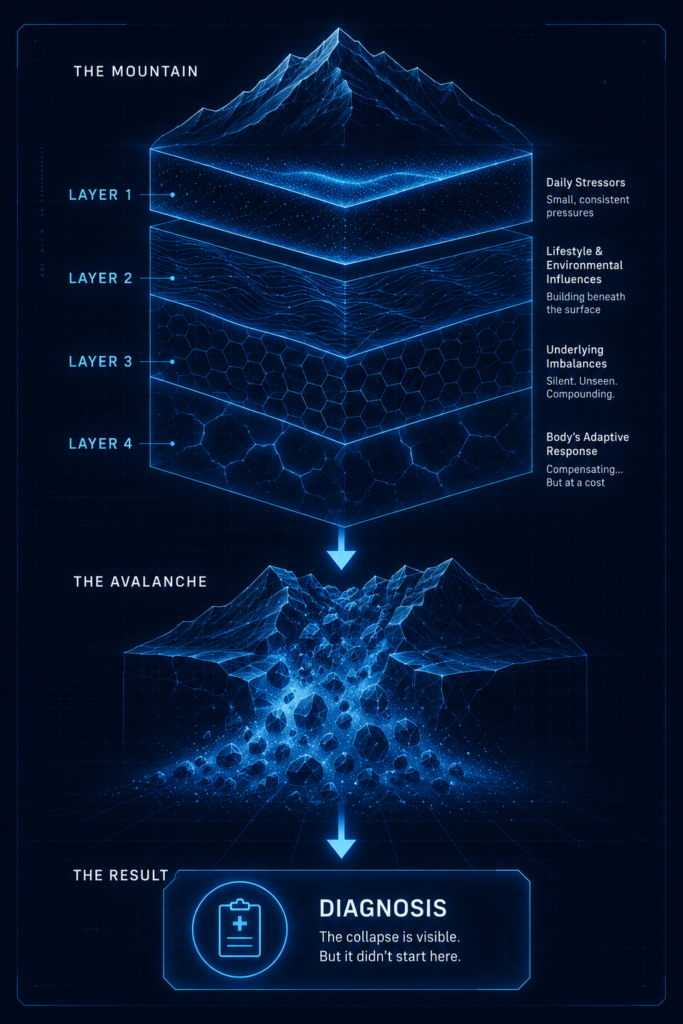
A diagnosis can be valuable. It can help explain symptoms, guide treatment, and create a shared language between patient and provider. That has real worth.
But a diagnosis is often a description. It tells us what is happening. It doesn’t always tell us why.
Imagine standing at the base of a mountain after an avalanche. The destruction is obvious and real. But the avalanche didn’t begin when the snow fell. It began long before — with layers accumulating quietly over time, small shifts in temperature and pressure, conditions building toward collapse in ways that were invisible until they weren’t.
Health works the same way. Long before a diagnosis is made, the body has been adapting to countless influences — some helpful, some harmful. By the time symptoms appear, the process has often been unfolding for years.
Two people can receive the same diagnosis and arrive there through completely different paths. One through chronic stress. Another through infection. Another through environmental exposure. Another through a physical trauma the body never fully resolved. The label may be identical. The story behind it is not.
Foundational Medicine seeks to understand that story — because lasting change begins when we understand what has been influencing health all along.
If health is shaped by many influences, the question becomes: which ones matter most for you?
The answer is discovery.
Before recommending a direction or a path forward, we begin by understanding the bigger picture. What patterns are present? What has the body been adapting to? What influences have been quietly shaping how it functions?
Most healthcare begins with a diagnosis and works forward from there. At Denali, we begin earlier — asking the questions most systems never get to, and building a path designed for your specific story.
Because the best plan isn’t the one that works in general. It’s the one who understands what’s actually happening.
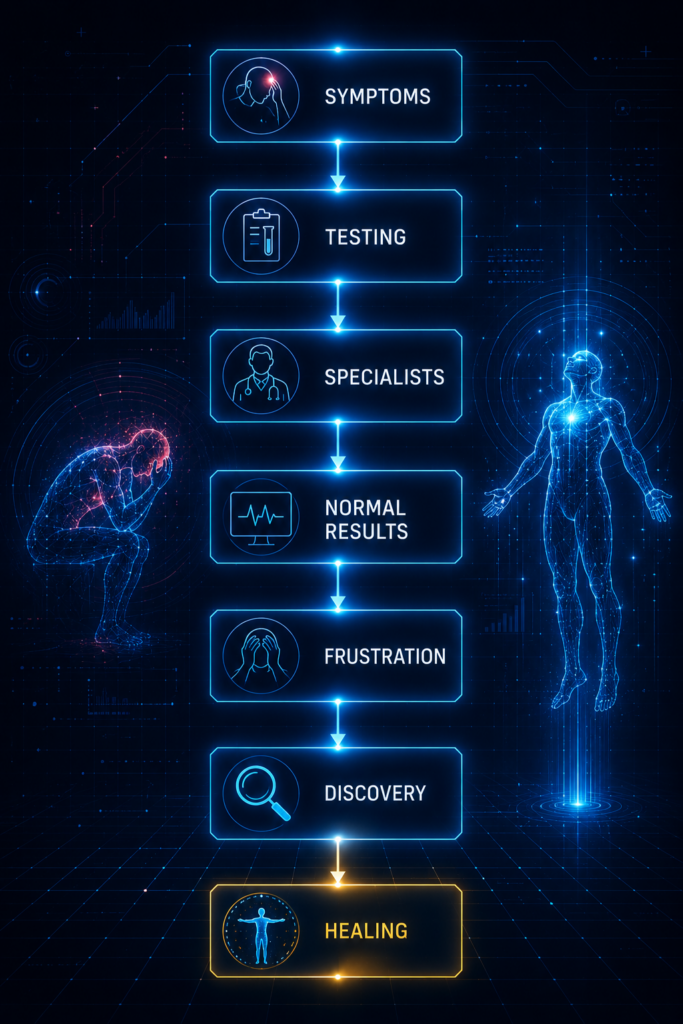

Dr. Earl walked back from an 85 percent mortality prediction. Not through fortune alone — through understanding. Through asking better questions, identifying what was actually driving his condition, and supporting the body’s capacity to heal when the obstacles in its way are finally addressed.
That experience gave him something no medical training could: the understanding of what it feels like to be failed by the system you trusted, and the conviction that a better approach was not only possible but necessary.
It also gave him a clarity about what medicine is actually for.
The goal of Foundational Medicine is not simply to help people feel better.
It is to help people understand what has been undermining their health, remove unnecessary obstacles, and create the conditions that allow the body to function as it was designed to.
Because when the foundation changes, everything built upon it has the opportunity to change as well.

Modern medicine is
exceptionally good at
identifying disease.

Modern medicine is
exceptionally good at
identifying disease.

Modern medicine is
exceptionally good at
identifying disease.
This question shifts the focus from naming symptoms
to understanding the factors influencing them.
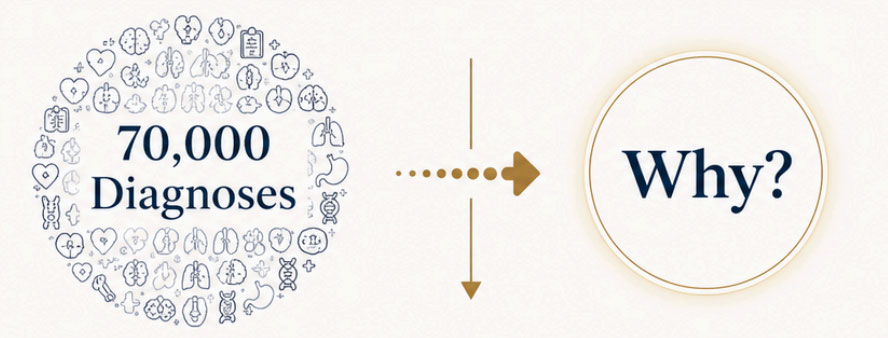
If you have been searching for answers, if you have been told everything looks fine when it doesn’t feel fine. If you sense there is something deeper driving what you’re experiencing – that instinct is worth following.
Your story is unique. Your health deserves more than assumptions. And meaningful progress begins with understanding. Discovery is where the journey begins.
Enter your information below to learn how we've helped thousands treat the root source of their pain and helped them truly heal by triggering the body's innate healing system.